Happily ever after?

Shutterstock.com

Two professors embark on research to uncover people’s perceptions of those who acquire things versus experiences.

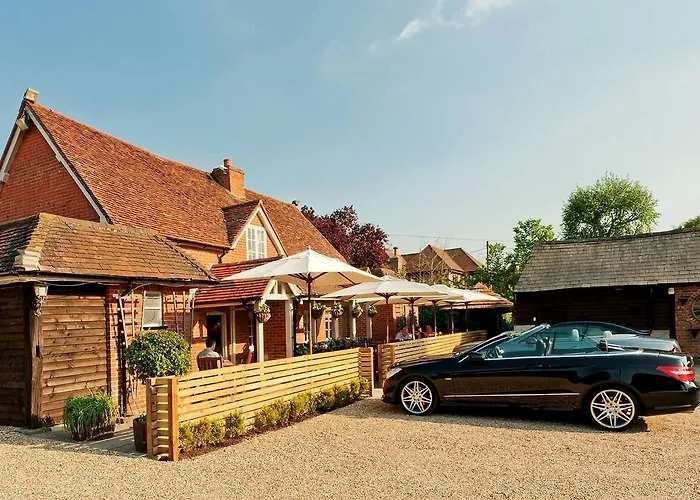
So, you thought that hot little sports car was going to make you happier? Cooler, even? More admired?

Don’t count on it. In fact, if people catch even the faintest whiff of triumph or braggadocio from you, they’re more likely to think of you as insecure, self-centered, judgmental and less likeable.

On the other hand, if you spent some disposable income on, say, your dream adventure of canoeing in Canada to see the northern lights and hear wolves howl at the moon, people are likely to see you as humorous, open-minded, friendly, intelligent and caring.

In other words, if you want people to admire and like you, spend your money on experiences, not things, according to CU-Boulder researchers Leaf Van Boven, associate professor of psychology, and Margaret Campbell, associate professor at the Leeds School of Business.

“People form impressions of us based on how we pursue happiness,” Van Boven says. “When people observe others behaving in materialistic ways and reflecting the belief that having material things makes them happier, they make an inference that those people are materialistic and therefore not very social.”

Religious leaders have been preaching this for centuries. Buddha’s Second Noble Truth is that “attachment” is the cause of all suffering. Jesus said, “One’s life does not consist in the abundance of possessions,” and Aristotle concluded that doing and being are a straighter path to happiness than having.

“It’s not that people don’t take pleasure in nice things,” says Robert H. Frank, economics professor at Cornell University whose seminal 1999 work Luxury Fever: Why Money Fails to Satisfy in an Era of Excess is cited in Campbell’s and Van Boven’s work. “They often do. But there is no evidence that people are any happier for having those things.”

Campbell and Van Boven, who met at CU through their interest in consumer behavior, came to some additional conclusions: Materialistic people behave badly and such behavior makes social relationships difficult. Research cited in support of that conclusion has found that materialistic people are “more Machiavellian” and “behave less cooperatively” — and people know it.

But let’s clarify something first. The researchers make a distinction between buying material necessities, such as food and clothing, and goods bought with disposable income. The two do not suggest that a family that spends its scarce grocery money on a trip to the amusement park is going to be “happier.”

And of course it’s not always easy to distinguish between what’s “material” and what’s “experiential” — is a piano a thing, an experience or both?

More important is how the acquirer of things or experiences comes across to other people. Campbell and Van Boven agree it’s entirely possible to use an “experience,” say, a heli-skiing trip, as a brickbat to impress others (which, ironically, just about guarantees it won’t).

“Did they take the trip so they can come back and tell everyone they went on this great trip, or because they truly wanted to go out and commune with self and nature?” Campbell asks.

“It’s not the act itself,” Van Boven says, “but the meaning we put on the act.”

It all has to do with whether one’s motivation is “intrinsic” — engaging in an activity or purchase for its inherent value — versus “extrinsic” — primarily doing something in search of status or admiration. Run a marathon to brag about it: extrinsic. Run to push your personal limits, lose weight or — no, really — have fun: intrinsic.

“We generally see that people who are making materialistic purchases are more extrinsically motivated,” says Campbell, who says her specialty is exploring what she calls “the dark side of marketing.”

On the flip side, not every material purchase automatically paints the buyer as a braggart or a cad. For every guy cruising in a snazzy ragtop sports car with personalized plates, there’s a buyer who truly appreciates and loves an object for itself.

If you buy something because you truly appreciate the value of, for example, finely constructed clothing or jewelry that is durable and meant to last, others probably will view that in a pretty favorable light, Van Boven says.

And here’s a comforting wrinkle for the holiday season: Buying gifts for others, no matter how lavish, especially for traditional holidays, is almost always viewed as generous.

But despite a growing “voluntary simplicity” movement (“That would be an interesting area of study,” Cornell author Frank says), Van Boven isn’t so naïve as to think people living in our materialistic society are suddenly
going to eschew Gucci for game night
en masse. And he admits that applying some idealistic notions gleaned from
his research doesn’t always fly in the
real world.

“I’ve tried to apply some of these lessons of gift giving in my own family,” he says. “They haven’t responded particularly well if I suggest they are not going to get presents.”

But the lessons from Van Boven’s and Campbell’s research, and others before them, are unequivocal.

“More fun, less stuff!” Van Boven says.

Clay Evans lives in Niwot with his family and 11 pets. He is working on a book about his grandfather who was killed in the World War II Battle of Tarawa in 1943.

Share and Enjoy:
  • del.icio.us
  • Facebook
  • Google Bookmarks
  • email
  • StumbleUpon
  • Twitter
This entry was posted in Features. Bookmark the permalink.

6 Responses to Happily ever after?

  1. Juana Gomez says:

    Hi, Leaf,

    I have always felt that funding my trips to places like Eastern Europe and the Yucatan completed me as a person. These expenditures resulted in buying a smaller house, but those trips were a great investment anyway.

    Thank you for your research.

    Juana Gomez (Carlos and Rosa’s mom)

  2. Leaf Van Boven says:

    Thanks for the compliment, Juana. The pursuit of experiences over stuff is a nice heuristic to live by, and I’m glad to have been part of research that puts some scientific validity to received, if not sufficiently appreciated and implemented, wisdom.

    Leaf

  3. Jared Adamson says:

    Leaf and Margaret,

    I 100% agree that happiness does not come from the materialistic things that us Americans seem to be so fond of. I have a great amount of respect for people who have walked the Great Wall of China, or have experienced the wonders of the pyramids of Egypt, or have ran a marathon for the sheer enjoyment and peace it gives them. Ever seen I went on Semester at Sea in the Fall of 2008, I love to share my experience of traveling with other fellow travelers. But, within these conversations, I never let myself brag about all the cool things I got to do. I always tell stories of the people I met, the cultures I encountered, and the mountains I got to climb. An experience, in my mind, is something that changes people in a way in which they find their inner self. For example, a person that indulges himself/herself in a community in Africa to help out the children in need, realizes that his/her Ford truck back home has nothing to do with positively affecting these kids. This experience with helping these children (with almost nothing) can change one’s outlook on life. And they can thus feel happy about making a difference in the lives of others.

    Thanks,

    Jared Adamson

  4. Brittany Peterson says:

    Hi Leaf,
    I am from Chicago, IL and I have lived here my whole life. I am 22 and just recently have been exposed to the stressful workload over here. I have always been one to thrive on anytime I can get outdoors. Mostly through riding my bike or running. I’ve been to Colorado a few times and it seems much less aggressive there. Since I live in a large city, I’ve noticed people finding temporary happiness in their posessions. It’s a vicious cycle really, people make money to buy things only to find that they “need” more money. The socialization here is less active than other places and it’s very sad. I eventually would like to move to Colorado but I think I should stay to keep part of Chicago sane. Thank you for the insight!
    -Brittany

  5. This is such a great topic for discussion. I presently live in Los Angeles where consumption and accumulation of things is probably the highest in the world. In about 3 weeks I will be relocating to Costa Rica to begin a “downsized” lifestyle centered around experiences as you describe. Much of the world, and in particular people in the USA, seem to be under the false impression that getting more things will make them happier. I think this has become much more prevalent in the last 40 years than it was prior to that time. Before the 70′s people saved part of their income and if something couldn’t be afforded it was put on lay away until it was finally paid for. Credit cards have helped to magnify it all and driven up consumption without improving happiness what-so-ever. Before the 70′s there was not a single square foot of storage facility businesses in the US and now there are billions of square feet to hold the stuff people buy that they can’t fit at home.


    An interesting talk I watched on Ted Talk compared the happiness index of people in many countries with their level of consumption of natural resources as a nation and as could be expected the USA had one of the highest levels of consumption in the world and only had a moderate level of happiness while Costa Rica had one of the lowest levels of consumption and the highest happiness index of any country on the planet. Costa Rican’s, or Tico’s as they are called, tend to spend their time with family and friends doing things together. The common saying is that they “work to live” instead of “live to work”.

    Another article I read somewhere conducted interviews with hundreds of people from all over the world that were traveling in the USA and one of the most common things they said about their visit to the US was that nowhere they had ever visited had they ever seen people so driven to work. Americans tend to “live to work their life” instead of “work to live their life”. Perhaps this is a factor in the whole consumption equals happiness thing. One thing is for sure though… we will all be doing with a lot less when the almighty dollar collapses from too much printing enough money to fix it any more. Maybe the end result of that will be that people will be happier when that happens.

  6. Laura says:

    There develops a very fulfilling emotion when one does something for personal growth or even simply for fun. Having experienced a variety of cultures, I come to share with others the many things I learned, from differing customs and adapting to them, to learning new languages for positive communication.
    Material things come and go. There might be some items one possesses that have a very significant meaning, such as a drawing pad for me. Yet, this item is categorized as the beneficial “material” that my life revolves around.

    Overall, great article. Thanks.

Leave a Reply

Your email address will not be published. Required fields are marked *

*

You may use these HTML tags and attributes: <a href="" title=""> <abbr title=""> <acronym title=""> <b> <blockquote cite=""> <cite> <code> <del datetime=""> <em> <i> <q cite=""> <strike> <strong>